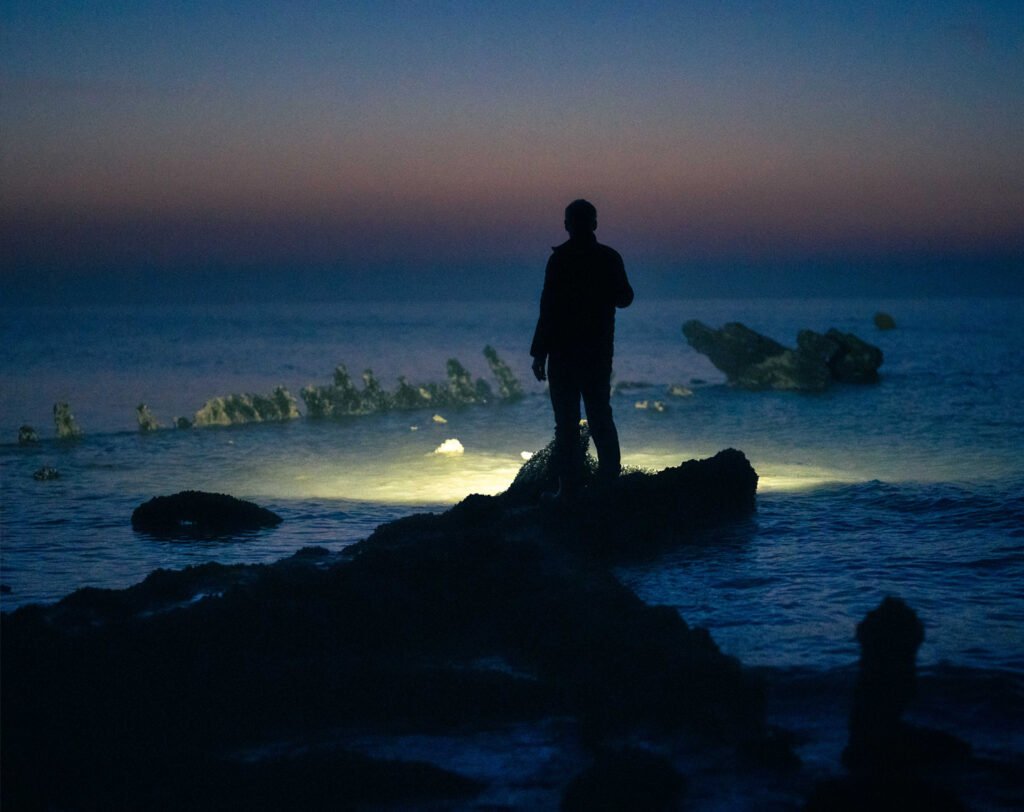
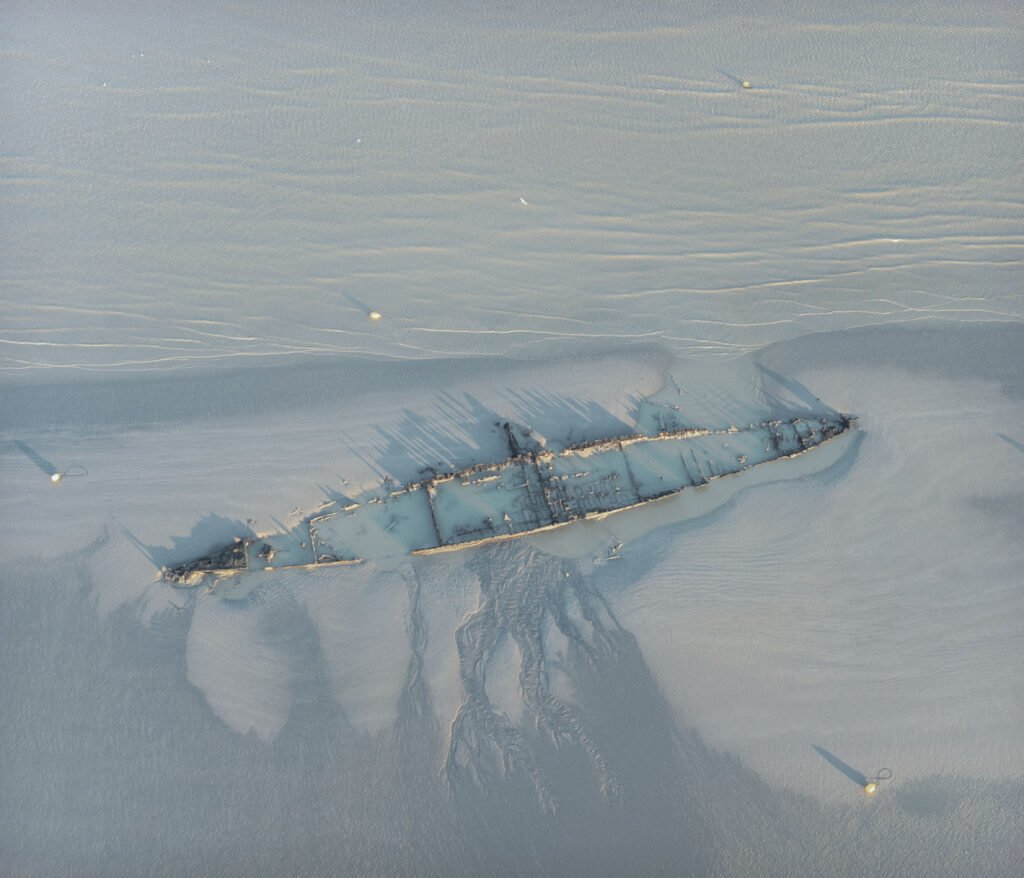
Les Eaux Noires. The toxic legacy of the Second World War.
More than 8,500 shipwrecks now lie on the ocean floor, remnants of the two world wars. Millions of tonnes of oil remain trapped in their holds, whilst cargoes of munitions containing explosives, heavy metals and chemical compounds pose a threat.
For decades, these metal structures have contained these substances. But 80 years after the Second World War, the passage of time is revealing the true extent of the damage. Corrosion, estimated to average several millimetres a year, has gradually weakened the hulls of ships and the casings of shells.
This is a photographic exploration in which Juliette Pavy accompanies scientists and knowledgeable enthusiasts from research laboratories to the depths of the sea, diving right up close to these carcasses to reveal their unsettling beauty.
A French photographer born in 1996 in Rennes, Juliette Pavy lives and works between Paris, Brittany and Greenland. A graduate in photojournalism from the Ecole des métiers de l’information in Paris, she regularly contributes to the international press and focuses her documentary work on environmental and social issues in the Arctic, notably through a report on forced sterilisation in Greenland. A co-founder and member of the Hors Format collective, she has received several prestigious awards, including the title of Photographer of the Year at the Sony World Photography Awards. Her work has been exhibited at the BnF (Paris), Les Champs Libres (Rennes), Somerset House (London), and the Les femmes s’exposent festival (Houlgate).